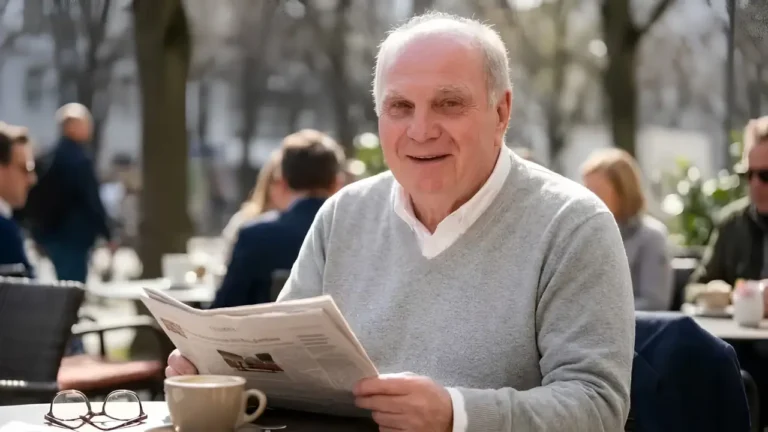

Uli Hoeneß’s net worth in 2026 is estimated at roughly $290 million to $340 million, or about €270 million to €320 million. The figure is not the product of a single football salary or a celebrity endorsement deal; it reflects decades of business ownership, private investments, real estate, and an unusually long career at the center of FC Bayern Munich’s commercial transformation.
The most interesting part of the story is that Hoeneß did not become wealthy primarily because he was a great player. His playing career ended early because of injury, but he turned that setback into a second life as one of European football’s most influential executives—and, separately, into a successful food entrepreneur.
Why Uli Hoeneß’s Net Worth Matters
Uli Hoeneß’s net worth in 2026 matters because it captures a rare kind of wealth creation in modern football. Many former players convert fame into media work, coaching, or ambassador roles. Hoeneß instead built influence inside a club, then used that influence to help turn Bayern Munich into one of the strongest commercial institutions in world sport.
His financial story also carries a complicated moral dimension. In 2014, he was convicted of tax evasion involving a Swiss bank account and served part of a prison sentence before returning to public life and being re-elected as Bayern president in 2016. That episode permanently changed how many people view his legacy, even as his business and football achievements remained substantial.
The renewed attention on Uli Hoeneß’s net worth in 2026 also comes at a moment when Bayern’s ownership and valuation are again in the headlines. Reports have linked Hoeneß to discussions around a potential €250 million investment for a five percent stake in FC Bayern AG, which would imply a club valuation near €5 billion. Hoeneß is no longer the club’s president, but he remains an honorary president and a figure whose judgment still carries weight in Munich.
The Real Source of His Wealth
The central misunderstanding about Uli Hoeneß’s net worth is that it was made through football alone. In reality, the foundation of his personal fortune appears to be his stake in HoWe Wurstwaren KG, the Nuremberg-based sausage business co-founded in 1985. The company produces Nuremberg bratwurst and supplies retail and hospitality customers, with an estimated annual turnover of around €53 million in 2025.
That business may sound far removed from Champions League nights at the Allianz Arena, but it is exactly the kind of stable, cash-generating enterprise that can quietly compound over four decades. Food manufacturing does not produce the glamour of football, but it can produce dependable margins, long-term customer relationships, and meaningful enterprise value.
Hoeneß’s wealth also benefited from capital investments made after his playing career ended. He entered management at Bayern at just 27, a position that gave him both income and access to a network of investors, sponsors, and business opportunities. Over time, those relationships helped him build private wealth beyond his official club roles.
Estimated Asset Breakdown
Because most of Hoeneß’s holdings are private, any estimate of Uli Hoeneß’s net worth in 2026 is an informed valuation rather than an audited balance sheet. The table below reflects a reasonable mid-range estimate based on his known business interests, reported wealth estimates, and the nature of his assets.
| Asset category | Estimated value in U.S. dollars | Share of net worth | Why it matters |
|---|---|---|---|
| HoWe Wurstwaren KG ownership stake | $150 million to $180 million | About 50% | The core operating business and largest long-term wealth driver. |
| Private investments and capital holdings | $65 million to $85 million | About 23% | Decades of investing, business relationships, and accumulated capital. |
| Real estate, including Tegernsee-area property | $30 million to $45 million | About 11% | High-value German residential and lifestyle property adds stability to the portfolio. |
| FC Bayern-related earnings, pensions, and retained value | $20 million to $30 million | About 8% | Long executive career, leadership roles, and club-linked financial benefits. |
| Cash, securities, and other liquid assets | $15 million to $25 million | About 6% | Provides flexibility and supports future investments or family wealth planning. |
| Estimated total net worth | $290 million to $340 million | 100% | A private-wealth estimate, not a publicly verified account balance. |
Using a midpoint estimate, Uli Hoeneß’s net worth in 2026 can reasonably be placed near $315 million. That would make him one of the wealthiest former German footballers, though his fortune is better understood as an entrepreneur’s balance sheet than an athlete’s retirement fund.
From Injured Striker to Business Builder
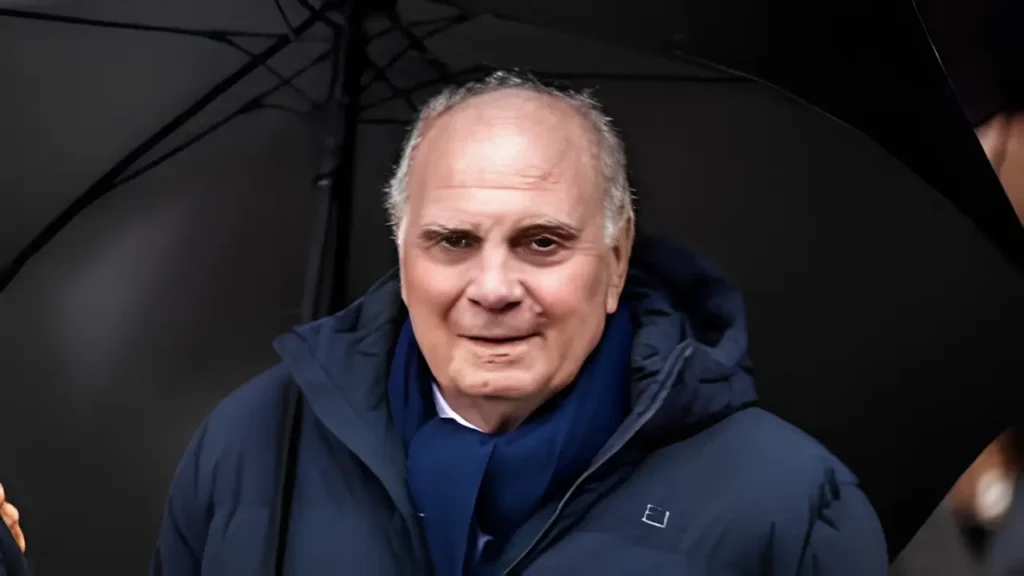
Hoeneß’s career could have ended as a story of unfulfilled potential. He played for Bayern from 1970 to 1979, scored 86 goals in 239 Bundesliga appearances, and won three European Cups, three Bundesliga titles, and the 1976 Intercontinental Cup. But injuries forced him to retire at 27.
Instead of disappearing from the game, he became Bayern’s general manager in 1979. That decision changed both his life and the club’s history. Under his leadership across management and presidential roles, Bayern won 57 trophies, including two Champions League titles, 24 Bundesliga championships, and 14 DFB-Pokal victories.
The business lesson is clear: Hoeneß understood earlier than many of his contemporaries that a football club is not only a sporting institution. It is a brand, a media platform, a sponsor magnet, and a real-estate and hospitality ecosystem. Bayern’s turnover exceeded €750 million in the 2018-19 financial year, a scale that would have been difficult to imagine when Hoeneß first took over the club’s management.
Why the Sausage Business Matters So Much
The phrase “sausage factory” can make Hoeneß’s wealth sound accidental or modest. It should not. HoWe Wurstwaren is a serious regional manufacturing business with an estimated 300 employees and production capacity of up to four million sausages per day.
For a private company, a business generating tens of millions in annual revenue can be worth a substantial multiple of earnings, particularly if it has strong distribution, brand recognition, and stable demand. Hoeneß’s stake may not be publicly disclosed in precise percentage terms, but it is widely regarded as the largest component of Uli Hoeneß’s net worth.
This is also why his wealth is less volatile than that of many sports figures. A footballer’s post-career income often depends on media demand, endorsements, or short-term appointments. A manufacturing stake, by contrast, can continue producing value across generations. His son Florian Hoeneß has been involved in the company since 2001 and became managing director in 2010, suggesting a deliberate family-business succession plan.
The Bayern Effect on His Fortune
It would be misleading to separate Hoeneß’s personal wealth entirely from Bayern Munich. His decades at the club gave him income, status, access, and credibility. He served as Bayern’s vice chairman from 2002 to 2009, became club president in 2009, and later returned as president and supervisory board chairman in 2016.
Yet Bayern itself is a members’ club structure, not a company Hoeneß personally owns in the way he owns a stake in a private business. That distinction matters. Uli Hoeneß’s net worth in 2026 is not simply a calculation of Bayern’s enterprise value divided among its leaders. His football career created influence and opportunity; his private business holdings created much of the actual personal wealth.
Still, Bayern’s financial strength reinforces his reputation as a value creator. The club’s commercial rise under his watch helped establish the credibility that made his other ventures easier to build. In that sense, football was not merely his employer—it was his platform.
A Complicated Financial Legacy
No serious analysis of Uli Hoeneß’s net worth in 2026 can ignore the tax-evasion conviction. He admitted to evading taxes through a Swiss bank account and was convicted in 2014 for evading €28.5 million in taxes. He began a three-and-a-half-year prison sentence in 2014 and served half of it before release.
That history makes his wealth story more than a celebration of business success. It is also a case study in reputational risk, financial transparency, and the long cost of tax misconduct. Hoeneß returned to Bayern and regained a leadership role, but the conviction remains part of how the public evaluates both his character and his fortune.
For younger athletes and executives, the lesson is uncomfortable but useful: wealth is not only about how much you earn. It is also about how cleanly you structure, declare, and manage it. A large fortune can survive poor investments more easily than it can survive a credibility crisis.
What Comes Next for Hoeneß
At 74, Hoeneß is no longer building his fortune from scratch. The more likely focus is preservation, succession, and selective influence. His business interests appear increasingly family-oriented, with the next generation involved in the sausage company, while his Bayern role has shifted from operational leadership to honorary and advisory influence.
The potential Bayern investment discussions could also shape how observers assess his remaining influence. If a major investor acquires a stake in FC Bayern AG at a valuation near €5 billion, it would reinforce the idea that the club Hoeneß helped build is now a global asset class of its own. That does not directly increase Uli Hoeneß’s net worth, but it strengthens the legacy value of everything he helped create in Munich.
His future plans are unlikely to involve a dramatic return to day-to-day football management. More plausibly, he will remain a behind-the-scenes voice, a family-business stakeholder, and a symbolic figure in German football—someone whose opinions still move conversations even when he no longer holds formal power.
The Bigger Lesson
Uli Hoeneß’s net worth in 2026 is best understood as the result of three overlapping careers: footballer, football executive, and entrepreneur. The first gave him fame, the second gave him power, and the third gave him durable wealth.
The unusual part is that the least glamorous of those three—making Nuremberg sausages—may have contributed more to his personal fortune than his legendary status at Bayern. That is a useful reminder that celebrity creates opportunity, but ownership creates wealth.
For all the controversy surrounding his tax case, Hoeneß’s financial trajectory shows how a person can convert early adversity into long-term enterprise. His playing career ended too soon, but his ability to identify value, build institutions, and hold assets for decades turned a shortened football career into a nine-figure business legacy.
In the end, Uli Hoeneß’s net worth in 2026 is not just a number attached to a former Bayern president. It is the financial footprint of a man who understood that football can make you famous, but business—done patiently and owned for a long time—can make you rich.
About the Author