
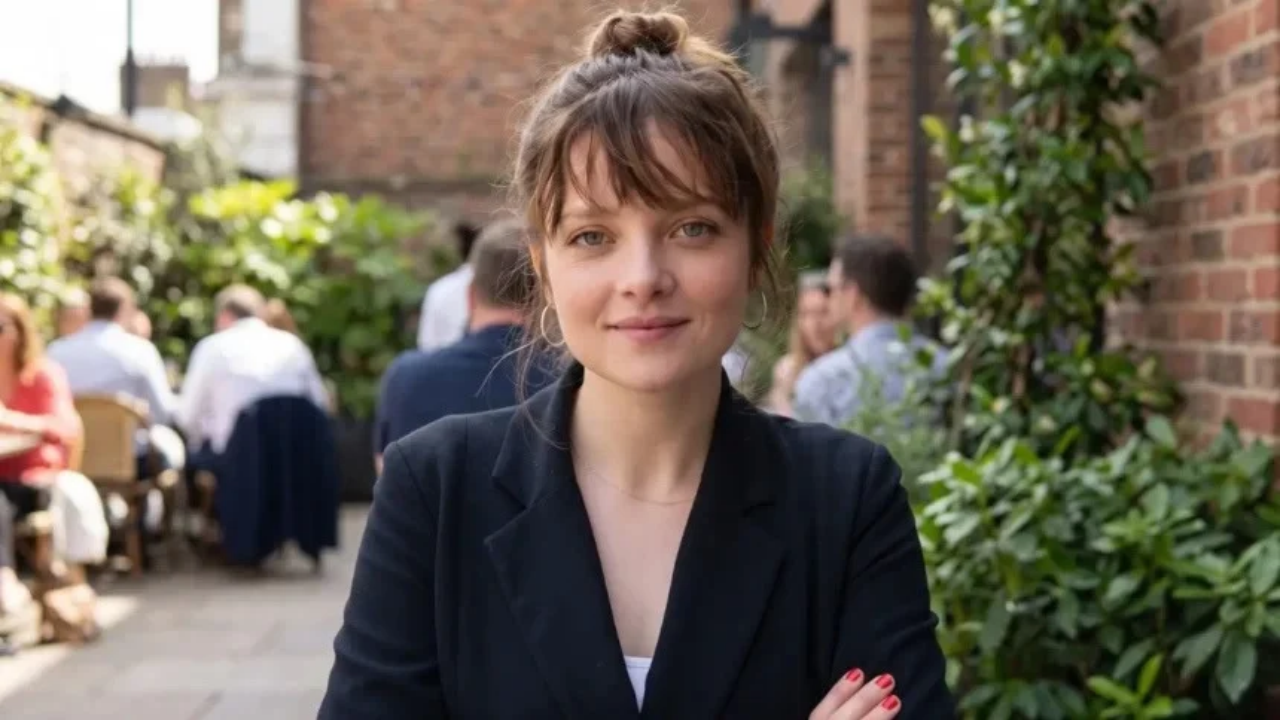

Jella Haase stands as one of the most compelling and versatile actresses of her generation in German cinema and television. From her breakthrough as the unforgettable Chantal in the Fack ju Göhte trilogy to her commanding lead performance in the Netflix series Kleo, Haase has demonstrated remarkable range across comedy, drama, thriller, and action genres. Her career trajectory reflects not only exceptional talent but also a deliberate commitment to challenging roles that explore complex human experiences, particularly those of women navigating difficult circumstances in contemporary society.
Early Life and Beginnings
Jella Haase was born on October 26, 1992, in Berlin-Kreuzberg, Germany. Growing up in one of Berlin’s most vibrant and culturally diverse neighborhoods, she was exposed to a rich tapestry of artistic influences from an early age. Her mother worked as a dentist, providing a stable home environment that nonetheless encouraged creative expression. From childhood, Haase displayed a natural affinity for performance, regularly participating in school plays and local theater productions. These early experiences on stage proved formative, nurturing both her confidence and her understanding of character development.
Haase began her professional acting career while still in her teens, making her film debut in 2009 with the short film Der letzte Rest at just seventeen years of age. This early start did not come at the expense of her education, however. She successfully completed her Abitur, the German university entrance qualification, before embarking on studies in history, philosophy, and literature at university. This academic background would later inform her approach to acting, providing her with a deeper understanding of historical contexts, philosophical questions, and narrative structures that enriched her character interpretations.
Her first major television role came with the film Mama kommt!, followed by appearances in established German television series including Polizeiruf 110, one of Germany’s longest-running crime dramas. In 2010, she secured a significant role in six episodes of the science fiction series Alpha 0.7 – Der Feind in dir, demonstrating her ability to work within genre television while still in her late teens. These early television appearances established her as a reliable young talent capable of holding her own alongside more experienced actors.
Breakthrough and Critical Recognition
The year 2011 marked a turning point in Haase’s career with two dramatically different but equally impressive film performances. In David Wnendt’s Kriegerin (Combat Girls), she portrayed a young woman entangled in the neo-Nazi scene, a role that demanded emotional depth and fearless commitment to depicting uncomfortable truths about radicalization and identity. Around the same time, she appeared in Ziska Riemann’s Lollipop Monster, playing a teenager navigating the complexities of sexuality and self-discovery. For these dual performances, Haase received the Bavarian Film Award for Best Young Actress in 2012, recognition that signaled her arrival as a serious dramatic talent.
In 2013, Haase earned the Günter Strack Television Award for her work in a Tatort episode, further cementing her reputation in television drama. That same year brought the role that would make her a household name across Germany and beyond. In Bora Dağtekin’s comedy Fack ju Göhte (Suck Me Shakespeer), Haase played Chantal Ackermann, a brash, eccentric, and endlessly quotable student at a troubled Berlin school. The film became a cultural phenomenon, drawing millions of viewers and spawning two sequels in 2015 and 2017. Haase’s portrayal of Chantal resonated with audiences, particularly younger viewers who saw in the character a refreshingly authentic representation of teenage defiance and vulnerability.
The Fack ju Göhte trilogy’s extraordinary success, with over twenty-one million cinemagoers across all three installments, made it one of Germany’s most successful film productions ever. Haase’s performance was integral to this success, her comedic timing and natural charisma making Chantal an iconic figure for an entire generation. For her supporting role in the first film, she received a nomination for the German Film Award for Best Performance by an Actress in a Supporting Role in 2014. While the comedy brought her widespread recognition, Haase was careful not to be typecast, continuing to pursue diverse and challenging projects that showcased different facets of her abilities.
Artistic Range and Genre Versatility
What distinguishes Jella Haase from many of her contemporaries is her refusal to be confined to a single genre or character type. Throughout her career, she has moved fluidly between broad comedy, intimate drama, psychological thriller, and action-oriented narratives. This versatility became increasingly apparent in the years following the Fack ju Göhte trilogy, as she deliberately sought roles that would challenge audience expectations and expand her own artistic horizons.
In 2018, Haase appeared in 25 km/h, a road trip comedy-drama about two brothers reconnecting after years apart. Her performance added emotional depth to what could have been a simple comedy, demonstrating her ability to ground even lighter material in genuine human feeling. The same year, she appeared in Das perfekte Geheimnis (The Perfect Secret), the German adaptation of the Italian film Perfect Strangers, playing one of a group of friends whose relationships are tested when they agree to share all messages and calls received during a dinner party. The film’s success further established her as a reliable presence in ensemble comedies while allowing her to explore more nuanced emotional territory.
Haase’s dramatic capabilities received particular recognition with her role in Berlin Alexanderplatz (2020), Burhan Qurbani’s ambitious adaptation of Alfred Döblin’s classic novel. Set in contemporary Berlin, the film reimagines the story of a refugee struggling to survive in the city’s underworld. Haase’s performance added layers of complexity to the narrative, earning her a nomination for the Preis der deutschen Filmkritik (German Film Critics Award) in 2020. Her work in the film demonstrated her ability to contribute meaningfully to serious artistic cinema while maintaining her connection to mainstream audiences.
In Kokon (Cocoon), a 2020 coming-of-age drama directed by Leonie Krippendorf, Haase portrayed a mother navigating her daughter’s adolescence while dealing with her own complicated relationships. The film’s sensitive exploration of female experience across generations showcased Haase’s capacity for subtle, emotionally resonant performances. Her work in the film earned another nomination for the Preis der deutschen Filmkritik, underscoring the critical respect she had garnered for her dramatic work.
International Breakthrough with Kleo
In 2022, Jella Haase achieved international recognition with her starring role in the Netflix series Kleo. The action-thriller comedy follows a former East German Stasi assassin who, after the fall of the Berlin Wall, discovers she was betrayed by her own agency and sets out on a mission of revenge. Haase’s portrayal of Kleo Straub required her to embody a character who is simultaneously lethal and vulnerable, hardened by years of violence yet driven by deeply personal trauma. The role demanded physical preparation for action sequences, emotional range for dramatic moments, and comedic timing for the series’ darkly humorous elements.
Kleo became a significant success for Netflix, resonating with audiences both in Germany and internationally. The series offered a unique perspective on post-reunification Germany through the lens of a genre narrative, blending spy thriller conventions with character-driven drama. Haase’s performance anchored the entire production, her ability to convey Kleo’s complexity making the character compelling even in the most extreme situations. Critics praised her work, noting how she brought humanity to what could have been a one-dimensional action hero.
The role earned Haase numerous accolades, including the German Television Award for Best Actress in 2023, the German Acting Award, and the Romy Award for Most Popular Actress in a Series. The series was also recognized with the German Television Award for Best Drama Series. A second season premiered in July 2024, continuing Kleo’s story and further developing the character’s journey. The success of Kleo marked Haase’s transition from a primarily German-focused career to one with genuine international reach, opening doors for future projects beyond German-speaking markets.
Continued Film Work and Artistic Evolution
Even as Kleo brought her international attention, Haase continued to maintain an active presence in German cinema. In 2021, she appeared in Lieber Thomas (Dear Thomas), a biographical drama about the writer Thomas Brussig. Her supporting performance in the film earned her the German Film Award in Gold for Best Performance by an Actress in a Supporting Role in 2022, adding another prestigious accolade to her growing collection. The recognition underscored her ability to excel in both leading and supporting roles, adapting her approach to serve each project’s specific needs.
In 2023, Haase reprised her iconic role as Chantal in Chantal im Märchenland (Chantal in Fairyland), a spin-off from the Fack ju Göhte universe that placed the character in a fantastical new setting. The film allowed her to revisit a beloved character while exploring new creative territory, demonstrating how she could honor her past work while continuing to evolve as an actress. The same year, she appeared in Schwarze Schafe (Black Sheep), a drama that provided yet another opportunity to showcase her range in a completely different register.
Haase’s filmography also includes voice work, notably in the animated film Die Heinzels – Rückkehr der Heinzelmännchen (The Heinzels – Return of the Heinzelmännchen) in 2019, and Kidnapping Stella in 2020, where she played the title character in a thriller about a young woman taken hostage. Each project added another dimension to her body of work, proving her willingness to experiment with different formats and genres. Her consistent output across film, television, and streaming platforms has made her one of the most visible and respected actresses working in German-language media.
Awards and Recognition
Throughout her career, Jella Haase has accumulated an impressive array of awards and nominations that reflect both critical esteem and popular appeal. Her early recognition came with the Bavarian Film Award for Best Young Actress in 2012, followed by the Günter Strack Television Award in 2013. These early honors signaled that industry professionals recognized her exceptional talent even before she achieved mainstream fame.
The Askania Shooting Star Award in 2014 acknowledged her status as an emerging talent worth watching, while her European Shooting Star designation at the Berlinale in 2016 brought her to the attention of international industry professionals. These honors during her mid-twenties reflected the trajectory of an actress steadily building both her craft and her reputation.
In subsequent years, Haase’s award recognition expanded to include major German film and television honors. Her German Film Award win in 2022 for Lieber Thomas represented one of the highest honors in German cinema, while her German Television Award for Kleo in 2023 recognized her excellence in the medium that had brought her some of her most memorable roles. The Romy Award for Most Popular Actress in a Series in 2023 demonstrated her connection with audiences, while the Bambi Award for Best National Actress in 2024 placed her among Germany’s most celebrated performers.
Additional nominations for the Preis der deutschen Filmkritik, the Grimme-Preis, and the Daffne Award further underscore the breadth of recognition she has received across different categories and institutions. This diverse array of honors reflects not only the quality of her work but also the variety of projects she has undertaken, from intimate dramas to popular television series to ambitious art films.
Acting Approach and Artistic Philosophy
Jella Haase has spoken in various interviews about her approach to acting and the kinds of stories that draw her to particular projects. Central to her philosophy is a commitment to telling honest stories, particularly those that explore the experiences of women in contemporary society. She has expressed interest in characters who struggle, search, and ultimately find their way through difficult circumstances, suggesting a preference for narratives that acknowledge complexity rather than offering easy resolutions.
Haase’s academic background in history, philosophy, and literature informs her approach to character development. She has indicated that understanding the broader social and historical contexts of her characters’ lives helps her create more authentic and nuanced performances. This intellectual engagement with her work distinguishes her from actors who rely solely on instinct, though she certainly possesses considerable natural talent and intuitive understanding of performance.
Her interest in untold stories has led her to seek projects that challenge conventional narratives and explore perspectives that are often marginalized or overlooked. This commitment is evident in her choice of roles, from the neo-Nazi scene participant in Kriegerin to the Stasi assassin in Kleo to the various complex women she has portrayed in dramas like Kokon and Berlin Alexanderplatz. Each of these characters exists in morally complicated territory, and Haase has shown no hesitation in embracing ambiguity and contradiction in her performances.
Haase has also spoken about the importance of vulnerability in her work, suggesting that authentic performance requires a willingness to expose emotional truth even when it feels uncomfortable. This openness to vulnerability is particularly evident in her dramatic work, where she allows her characters’ pain and confusion to register without attempting to soften or美化 their experiences. At the same time, her comedic work demonstrates an equally important capacity for lightness and play, suggesting an actress who understands that full human experience encompasses both darkness and humor.
Personal Life and Public Presence
Despite her considerable fame, Jella Haase has maintained a relatively private personal life, choosing to keep the focus on her work rather than on celebrity culture. She continues to reside in Berlin, the city where she was born and raised, maintaining connections to the artistic community that nurtured her early development. Her decision to remain based in Berlin rather than relocating to more traditional entertainment industry centers reflects her commitment to the German film and television industry while also suggesting a preference for the cultural environment that has shaped her artistic sensibility.
Haase’s public presence is characterized by professionalism and authenticity rather than self-promotion. In interviews, she has demonstrated thoughtfulness about her craft and the projects she undertakes, discussing her work with intelligence and self-awareness. This approach has earned her respect not only from audiences but also from colleagues and industry professionals who value her collaborative spirit and artistic integrity.
Her social media presence, while active, tends to focus on professional projects and occasional personal moments rather than the constant self-documentation that characterizes many celebrity accounts. This measured approach to public visibility has allowed her to maintain a sense of mystery and authenticity that enhances rather than diminishes her appeal. Fans appreciate her willingness to engage while also respecting her boundaries, creating a relationship based on mutual respect rather than intrusive familiarity.
Future Projects and Career Trajectory
Looking ahead, Jella Haase has indicated interest in expanding her work into English-language productions, suggesting that her international breakthrough with Kleo has opened possibilities she is eager to explore. She has announced involvement in a project titled Die Päpstin (The Pope), described as a feminist and wild series scheduled to begin shooting in the coming year. This project, which will be her first English-language series, represents a significant step in her career evolution and suggests ambitions that extend beyond German-speaking markets.
At the same time, Haase has continued to work on German-language projects, including the 2025 film Die Jahre mit Dir and the 2024 production Kinder der Sonne directed by Leonie Krippendorf, with whom she previously collaborated on Kokon. This ongoing commitment to German cinema alongside her international aspirations reflects her desire to maintain her roots while exploring new opportunities. The balance between local and global projects suggests an actress who understands the value of both her established reputation in German-speaking markets and the potential for broader recognition.
Haase’s career trajectory points toward continued evolution and growth. With her demonstrated versatility, critical acclaim, and popular appeal, she occupies a rare position in the industry: an actress who can carry major productions while also contributing meaningfully to ensemble work and supporting roles. Her willingness to take risks, both in her choice of projects and in her approach to performance, suggests that her best work may still lie ahead. As she enters her mid-thirties, she joins a cohort of actresses who have successfully navigated the transition from young talent to established star while maintaining artistic credibility and audience connection.
Cultural Impact and Legacy
Jella Haase’s impact on German popular culture extends beyond her individual performances. Her portrayal of Chantal in the Fack ju Göhte trilogy created a character that entered the cultural lexicon, with quotable lines and memorable mannerisms that continue to resonate years after the films’ releases. The character became a touchstone for discussions about teenage identity, class, and education in contemporary Germany, demonstrating how comedy can engage with serious social questions while entertaining mass audiences.
Her work in Kleo has similarly contributed to cultural conversations, this time about Germany’s divided past and the lingering effects of the Stasi era. By placing a female assassin at the center of a narrative about post-reunification identity, the series offered a fresh perspective on historical events that continue to shape German society. Haase’s performance made Kleo a compelling vehicle for these explorations, her ability to embody both the character’s lethal capabilities and her emotional vulnerabilities creating a figure that audiences could invest in fully.
Beyond specific roles, Haase’s career represents a model of artistic development that balances commercial success with creative integrity. In an industry that often pressures actors to choose between popular appeal and critical respectability, she has demonstrated that these goals need not be mutually exclusive. Her willingness to move between genres, to take on both leading and supporting roles, and to work across film, television, and streaming platforms has created a body of work that is both diverse and coherent in its commitment to quality and authenticity.
For younger actors and particularly for young women considering careers in performance, Haase offers an example of how to navigate the industry on one’s own terms. Her success has come not through conformity to narrow expectations but through the cultivation of genuine talent, intellectual engagement with her work, and the courage to take on challenging material. As her career continues to evolve, her influence on German cinema and television is likely to grow, inspiring future generations of performers to pursue ambitious, authentic work that honors both artistic integrity and audience connection.
Jella Haase’s journey from Berlin-Kreuzberg child actor to internationally recognized star reflects not only individual talent and determination but also the changing landscape of German-language media in the twenty-first century. Her work has contributed to the vitality and diversity of contemporary German cinema and television, helping to establish these industries as sources of compelling storytelling that can compete on the global stage while maintaining distinctive cultural perspectives. As she continues to take on new challenges and explore new creative territory, her contribution to the art of performance and to the cultural life of her country remains both significant and ongoing.