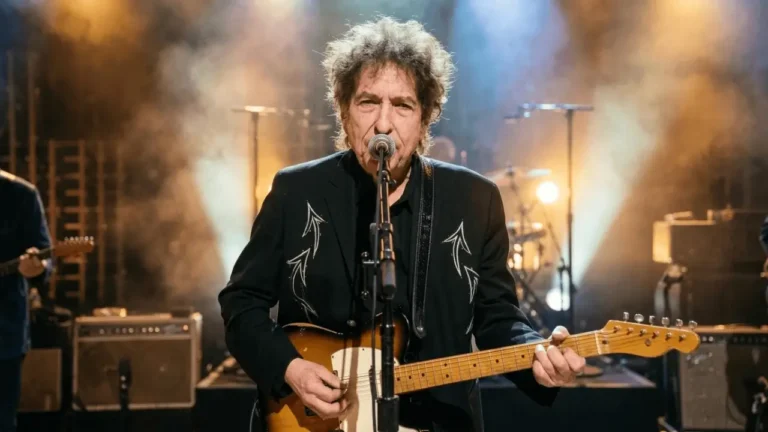
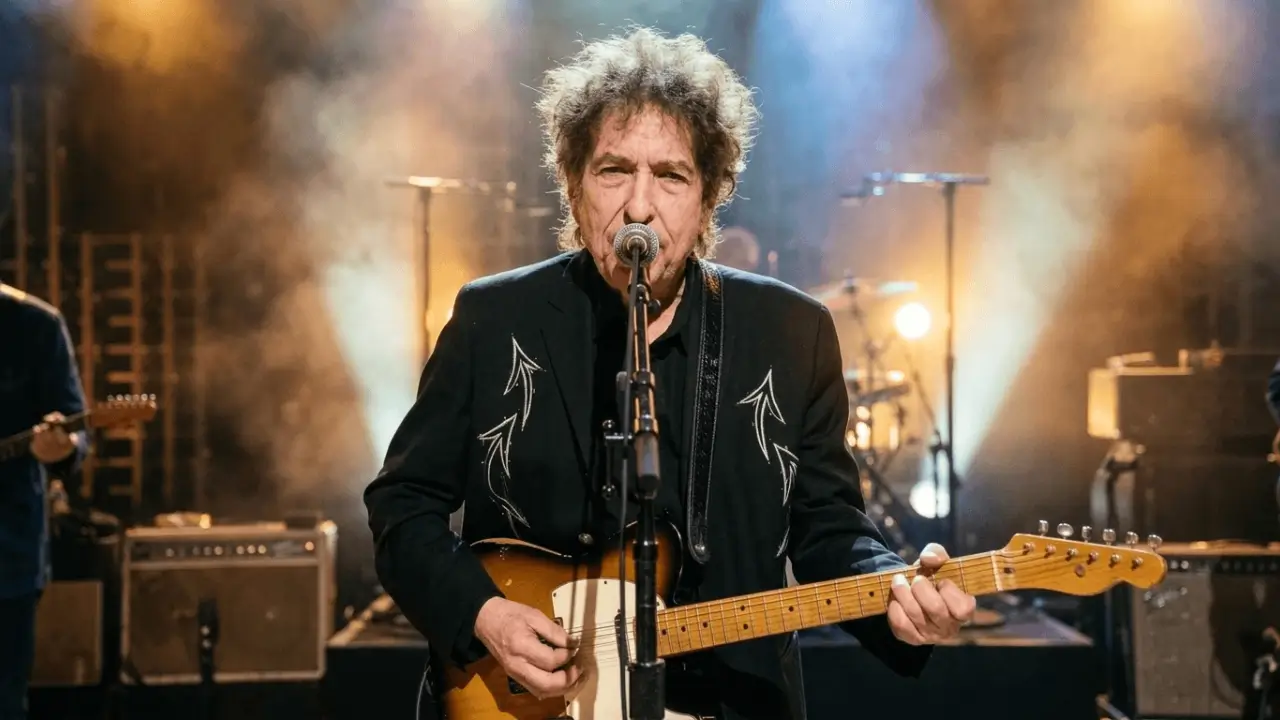
Bob Dylan Net Worth 2026 is estimated at roughly $500 million, placing the Nobel Prize-winning songwriter among the wealthiest figures in modern music history. What makes this figure remarkable is not simply its size, but how it was assembled: through six decades of songwriting, relentless touring, visual art, publishing, and two of the most consequential music-rights transactions ever completed.
For most artists, wealth is measured in albums sold or arenas filled. For Dylan, it is measured in intellectual property—songs that continue to generate cultural and commercial value long after their first performance. The story of Bob Dylan Net Worth 2026 is therefore less a story about celebrity income and more a story about how a songwriter transformed artistic permanence into financial security.
Why Bob Dylan Net Worth 2026 Matters
The interest in Bob Dylan Net Worth 2026 goes beyond curiosity about a famous musician’s bank balance. Dylan’s finances offer a rare case study in how an artist can retain control over creative assets for decades, then monetize them at the precise moment when the market for music catalogs reached historic highs.
In 2020, Dylan sold his publishing catalog—more than 600 songs, including compositions such as “Blowin’ in the Wind,” “Like a Rolling Stone,” “Tangled Up in Blue,” and “Knockin’ on Heaven’s Door”—to Universal Music Publishing Group. Reports placed the value at approximately $300 million to $400 million.
Then, in a separate transaction completed in 2021 and announced in 2022, Sony Music acquired Dylan’s recorded-music catalog, including master recordings from his 1962 debut through Rough and Rowdy Ways, along with rights connected to multiple future releases. That deal was estimated at roughly $150 million to $200 million.
Together, these agreements reshaped the way the industry views the value of a songwriter’s life’s work. Bob Dylan Net Worth 2026 is not just a number attached to an aging rock icon; it is evidence that songs can function like long-duration infrastructure—generating royalties, licensing income, and cultural relevance across generations.
Estimated Asset Breakdown
| Asset category | Estimated value | Share of estimated net worth |
|---|---|---|
| Proceeds and retained value from Universal publishing sale | $300 million–$400 million | About 60%–75% |
| Proceeds and retained value from Sony recorded-catalog sale | $150 million–$200 million | About 30%–40% |
| Touring income and performance-related earnings | $40 million–$60 million | About 8%–12% |
| Real estate holdings, including U.S. and overseas properties | $15 million–$25 million | About 3%–5% |
| Visual art, books, memoirs, and literary rights | $10 million–$20 million | About 2%–4% |
| Whiskey brand, merchandise, licensing, and other ventures | $10 million–$20 million | About 2%–4% |
| Investments, cash, and other private holdings | $20 million–$40 million | About 4%–8% |
| Estimated total net worth | About $500 million | 100% |
These categories should be treated as an analytical estimate rather than an audited balance sheet. Dylan’s private investments, tax obligations, trusts, and estate-planning structures are not public. Still, the broad architecture of Bob Dylan Net Worth 2026 is unusually clear because its two largest wealth events involved publicly announced catalog transactions.
The Catalog Deals That Changed Everything
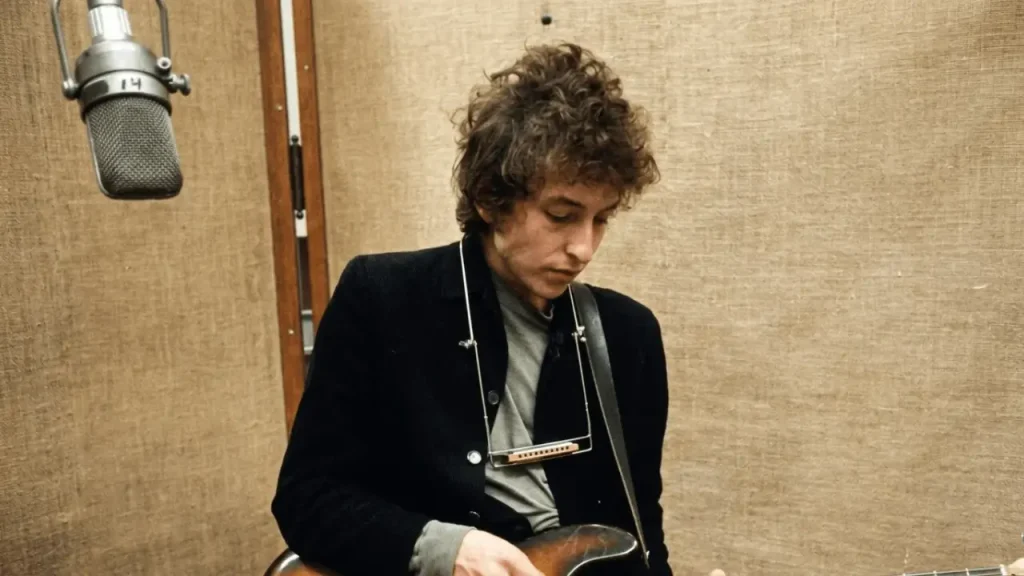
The central engine behind Bob Dylan Net Worth 2026 is the distinction between publishing rights and master recordings.
Publishing rights concern the underlying composition: the melody, lyrics, and song itself. When another artist records a Dylan song, when a film licenses one of his compositions, or when a song is performed publicly, publishing royalties may be involved. Dylan’s decision to sell this side of his catalog to Universal gave the company control over one of the most valuable songbooks in American music.
Master recordings, by contrast, concern the specific recorded performances: Dylan singing and playing on the original albums. Sony’s acquisition covered the recorded body of work, including studio albums, archival releases, and potential future projects.
This separation matters because Dylan did not sell “his music” in one vague transaction. He monetized two distinct asset classes at different moments, likely maximizing leverage and preserving flexibility. The result was a financial structure that now anchors Bob Dylan Net Worth 2026.
From an investment perspective, the timing was exceptional. Music catalogs became increasingly attractive to investors because streaming created recurring royalty income, while film, television, advertising, and gaming expanded licensing opportunities. Dylan’s songs were especially valuable because they are not tied to one era or audience. They are covered by artists across genres, quoted in political speech, taught in classrooms, and used in cultural moments that extend far beyond rock music.
Touring: The Quiet Financial Engine
While the catalog sales dominate headlines, Dylan’s touring career remains a meaningful part of Bob Dylan Net Worth 2026. His famous “Never Ending Tour” has kept him on the road for decades, and even in his mid-80s, Dylan continues to perform.
Touring income is often misunderstood. A reported touring revenue figure does not equal personal profit. Costs include band salaries, travel, production, management, insurance, venues, and taxes. Yet for an artist with Dylan’s drawing power, touring can still produce substantial net income, particularly because his shows do not depend on expensive spectacle or oversized production.
More importantly, touring reinforces the value of everything else Dylan owns. Each performance keeps his name in circulation, drives streaming activity, supports album sales, and sustains demand for archival releases. In that sense, touring is not merely income—it is marketing for the broader Dylan brand.
Beyond Music: Art, Books, and Business
Dylan’s wealth is not confined to recordings and songwriting. He has built a secondary creative economy around visual art, books, and branded products.
His paintings and drawings have been exhibited internationally, and his visual work often draws on the same themes of travel, American landscapes, memory, and restless movement found in his songs. These works add both cultural depth and commercial value to his portfolio.
His 2004 memoir, Chronicles: Volume One, demonstrated that Dylan’s literary voice could command a serious readership beyond music fans. His published lyrics, poetry, and archival projects further extend his intellectual-property footprint.
He also entered the spirits market with Heaven’s Door whiskey, a venture that connects his name to a premium consumer product. While whiskey is unlikely to rival the scale of his music transactions, it illustrates a broader principle: Dylan’s brand has become an asset independent of any single song.
The Real Meaning of a $500 Million Fortune
A $500 million estimate can sound abstract, but the deeper lesson of Bob Dylan Net Worth 2026 is about ownership and timing.
Dylan spent much of his career known as an artist who resisted commercial expectations. Yet he was not financially naive. He understood that authorship, control, and patience could be forms of power. By holding his publishing and recording rights for so long, he allowed their value to compound as streaming, global licensing, and nostalgia-driven media consumption expanded.
The sales were not necessarily a retreat from creativity. They were a form of estate planning and risk management. Selling catalog rights can convert uncertain future income into immediate capital, simplify inheritance, reduce administrative burden, and protect an artist’s family from the complexity of managing thousands of licenses and royalty streams.
For Dylan, the transactions also secured institutional stewardship for his work. Universal now manages the publishing side, while Sony controls major recorded-music assets and continues a relationship with Dylan that stretches back to Columbia Records in the early 1960s.
Future Implications for Dylan’s Estate
The future of Bob Dylan Net Worth 2026 will likely be shaped less by new income than by preservation, curation, and estate strategy.
Dylan retains the ability to create new music, publish new books, exhibit new artwork, and participate in future commercial projects. Sony’s agreement reportedly includes rights related to multiple future releases, which means new recordings could still become part of a larger catalog strategy.
The bigger question is succession. Dylan’s catalog will remain valuable for decades, but its management will eventually pass to heirs, trusts, or other estate structures. The challenge will be balancing commercial exploitation with artistic integrity. Over-licensing can generate short-term revenue, but it can also dilute the seriousness and mystique that make Dylan’s work valuable in the first place.
There is also the possibility of further archival releases. Dylan’s vault of outtakes, live recordings, alternate versions, and unpublished material has already fueled the long-running Bootleg Series. Future releases could create new revenue without requiring new studio albums, making the catalog an unusually durable asset.
What Dylan Teaches Today’s Artists
The financial story behind Bob Dylan Net Worth 2026 offers lessons for younger musicians navigating a streaming-dominated industry.
First, ownership matters. Advances and viral moments can create income, but long-term wealth often comes from retaining rights—or selling them strategically at peak value.
Second, catalogs reward consistency. Dylan’s fortune was not created by one hit. It was built through a vast body of work that remained culturally useful across changing formats, technologies, and generations.
Third, artistic identity can be a financial asset. Dylan’s refusal to be easily categorized—folk singer, rock star, poet, painter, author, touring musician—made his brand harder to replace and more valuable over time.
Finally, timing is part of talent. Dylan sold at a moment when major companies were competing aggressively for legendary catalogs. That timing converted creative legacy into extraordinary liquidity.
Final Analysis
Bob Dylan Net Worth 2026 stands at an estimated $500 million because Dylan understood something that many artists learn too late: songs are not only expressions; they are assets. His publishing and recording sales transformed a lifetime of writing into one of the most valuable personal music portfolios ever assembled.
Yet reducing Dylan to a balance sheet misses the point. The money is a consequence of permanence. His songs survived political change, technological disruption, generational turnover, and the collapse of the traditional record business. That survival created value.
As Dylan continues to tour, paint, write, and release work, his financial legacy will keep evolving. But the core of Bob Dylan Net Worth 2026 is already secure: a fortune built not on fleeting fame, but on words and melodies that continue to travel farther than any single artist ever could.
About the Author